AC Replacement & Installation in Los Angeles
The Work Begins Before the Installation
- THE INSTALL DETERMINES THE PERFORMANCE
A NEW AIR CONDITIONER IS ONLY AS GOOD AS THE INSTALLATION
Most AC systems don’t fail overnight. They gradually lose efficiency, struggle harder each summer, and get repaired until the repairs stop making sense. When that point comes, the installation matters.
Air conditioners work by removing heat from inside your home and moving it outside. How efficiently they do that — and how long they keep doing it — depends on the installation as much as anything else.
That’s why we start every job the same way: by looking at the full picture before anything gets ordered.
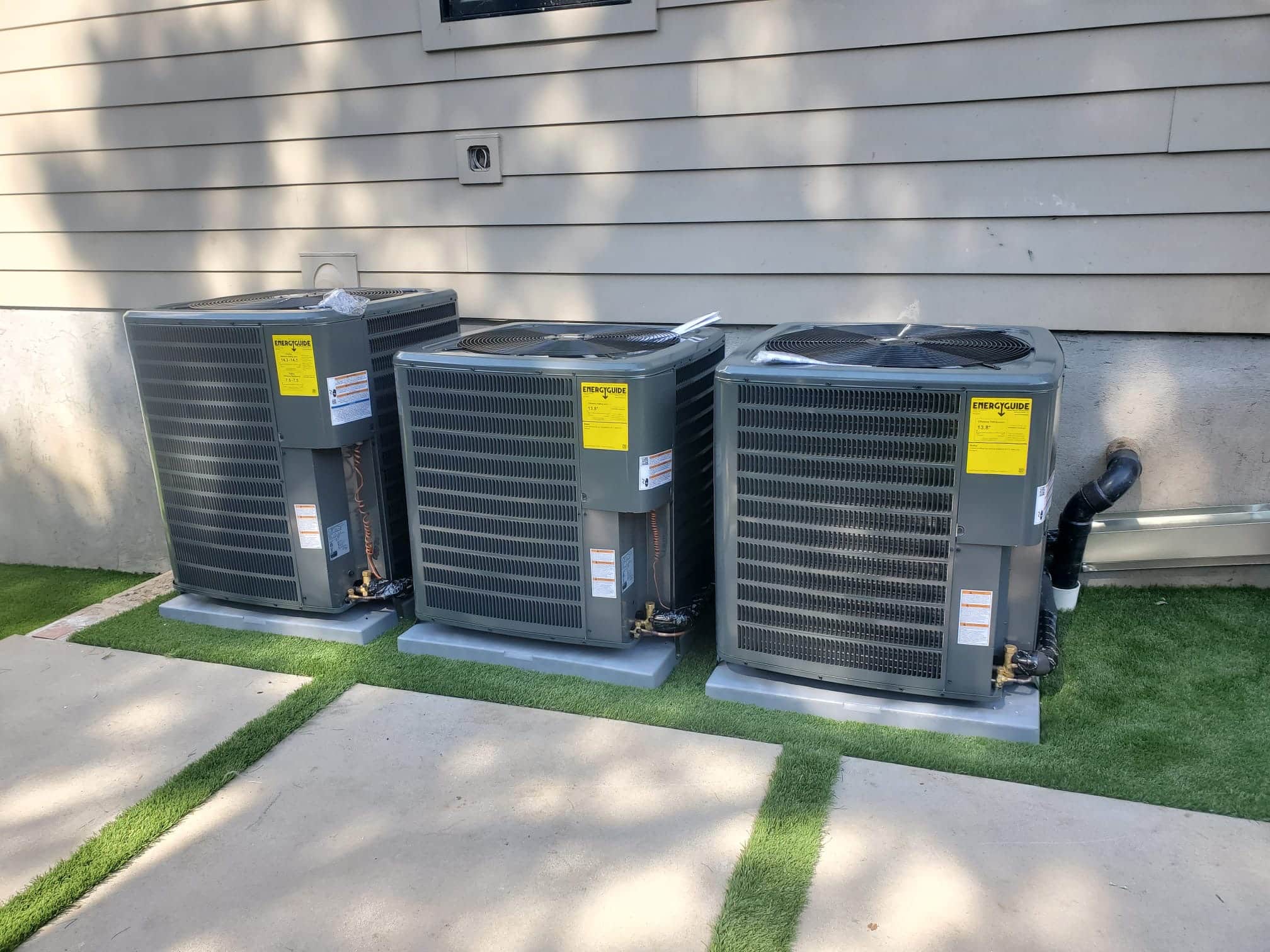
- THE HONEST ASSESSMENT
WHEN TO REPLACE INSTEAD OF REPAIR
This question comes up on every job with an aging system. The honest answer depends on more than just age.
01
What We Look At
How old the equipment is, what condition it’s in, and what a repair would cost relative to replacement. A 12-year-old system with a failing compressor is a different conversation than a well-maintained 14-year-old unit with a bad capacitor.
02
WHEN REPAIR STILL MAKES SENSE
An older system doesn’t automatically need to be replaced. If the equipment is otherwise in good condition and the repair makes sense for where the system is in its life, we’ll tell you it’s worth fixing.
03
WHEN REPLACEMENT MAKES MORE SENSE
If you’re putting money into a system that’s on its way out, we’ll tell you before you spend it. We give you a straight read on where your system stands so you can make the call.
- BEFORE ANY EQUIPMENT GETS ORDERED
Sizing an AC for Your Home
A proper replacement involves more than swapping equipment. Before anything gets ordered, we assess the ductwork, return air, electrical capacity, and the home’s cooling load — including insulation, ceiling height, and sun exposure.
An oversized system short-cycles — it cools the air quickly but shuts off before it can pull humidity out properly, leaving the house feeling clammy and putting unnecessary wear on the compressor. An undersized system runs constantly and still can’t keep up on the worst days.
We evaluate the ductwork on every replacement job. In roughly a quarter of them, sealed joints, resized runs, or replacement sections are needed. A new system installed into compromised ductwork will underperform from day one, and a better unit won’t fix it.
- ONE CITY. DIFFERENT CLIMATES.
THE VALLEY AND WESTSIDE AREN'T THE SAME JOB
Different climate, different demands, different design.
We’ve been doing both since 1981.
01
The San Fernando Valley
The Valley runs 10–15 degrees hotter than coastal LA on a typical summer day. That changes the load calculation, the equipment selection, and what the duct system needs to deliver — especially through a long, hot summer.
02
Westside & Greater LA
On the Westside, coastal humidity and salt air, hillside construction, and older homes create a different set of installation demands. Equipment sizing, placement, ductwork, and drainage all have to fit the house and its location.
- THE FULL SCOPE OF THE JOB
What AC Replacement Includes
When a system has reached the end of its useful life — or when the repair math stops making sense — replacement is the right call. We handle the full scope: removing the existing equipment, addressing any ductwork issues, installing the new system, and verifying performance before we leave.
We install systems across a range of efficiency levels, matched to what the home actually needs and what makes sense for the budget. We don’t push premium equipment where it doesn’t belong, and we don’t install the cheapest option just because it fits.
- STARTING WITHOUT CENTRAL AIR
ADDING CENTRAL AIR TO LOS ANGELES HOMES
Whether you’re building a new home, completing a remodel, or adding central air to a house that never had it, the system has to be designed before installation begins.
HVAC SYSTEM DESIGN
- Duct layout planned for the specific home
- Equipment placement and sizing
- Electrical capacity and routing
- Return air designed into the system from the start
WHAT AFFECTS THE INSTALLATION
- Framing that affects duct routing and equipment placement
- Insulation that affects system sizing and performance
- Electrical requirements that affect the installation
- Limited space for ductwork, returns, and equipment in older homes
WHY THE GC LICENSE MATTERS
- As both a licensed C-20 HVAC Contractor and licensed B General Building Contractor, we understand how HVAC work fits into the rest of the build. When the job calls for it, we look beyond the equipment and account for the framing, insulation, and electrical work that can affect the installation.
- A FASTER PATH TO COMPLETION
Permits and Inspections for AC Replacement in Los Angeles
Most AC replacements in Los Angeles require a permit and a city inspection. Through the City of Los Angeles Department of Building and Safety’s Certified Licensed Contractor (CLC) program, we’re certified to inspect and sign off on qualifying HVAC replacements for single-family homes.
For qualifying replacements, we use the City’s CLC program instead of the traditional permit and inspection process. Because we’re authorized to self-certify our work, the project can be completed and closed out without waiting for a city inspector.
The CLC program isn’t a shortcut — the work still has to meet all city code requirements. If a project falls outside the program’s scope and requires a standard city inspection, we’ll handle that process too.
- OFFSET THE UPFRONT COST
Energy Rebates and Incentives for AC Replacements
Depending on the equipment selected and your utility provider, new HVAC systems may qualify for rebates or incentives that can offset some of the upfront cost. Higher-efficiency systems typically qualify for the largest incentives, though programs can vary. It’s worth checking what’s currently available before making a final decision on equipment.
Why Homeowners Call Hoffman for AC Replacement
We look at the full system before recommending replacement equipment — airflow, ductwork, electrical, and sizing. The result is a system that cools evenly, runs efficiently, and performs the way it’s supposed to from day one.
AC Replacement FAQ
What SEER Rating Is Best for Valley Homes?
For most Valley homes, we recommend systems in the 16–18 SEER2 range because they offer a strong balance between energy savings, upfront cost, and long-term value. That said, the right choice depends on your situation: how long you plan to stay in the home, your budget, utility costs, and available rebates.
How long does AC replacement take?
Most residential replacements take one day. If duct modifications, electrical upgrades, or permits are involved, it can extend to two days. We’ll give you a clear timeline before the job starts.
Do I need a city inspection for AC replacement in Los Angeles?
Yes, in most cases. Permitted work helps ensure the installation meets current code. We handle the permit process, and through Los Angeles’ Certified Licensed Contractor (CLC) program, we can self-certify certain qualifying HVAC replacements for single-family homes.
How long should a new AC system last in Los Angeles?
Most systems last 15 years or more, though LA’s climate plays a role. Coastal homes deal with salt air that accelerates corrosion on outdoor components. Valley homes run their systems hard through long, hot summers — more hours annually than most of the country. Regular maintenance extends that lifespan. Skipping it shortens it.
How much does AC replacement cost?
The cost of AC replacement depends on the size of the home, the type of system, the condition of the ductwork, and how much work needs to happen beyond simply replacing the equipment. Older homes in Los Angeles often need airflow, duct, or electrical upgrades that can significantly change the scope of the project. A straightforward replacement is very different from upgrading a home that was never designed around modern HVAC.
The best way to get an accurate number is for us to come take a look.
What size AC unit do I need for my home?
Sizing an AC system involves more than square footage alone. Insulation, ceiling height, window exposure, duct condition, and how the house sits in the sun all affect what the home actually needs. In the Valley especially, where attic temperatures get extreme in summer, sizing the system correctly matters. A system that’s too small will struggle to keep up. One that’s too large will short-cycle and cool unevenly. We evaluate the home before recommending equipment.
Should I replace ductwork when installing a new AC system?
Not necessarily. If the ducts are in reasonable shape, we can often work with them. If the existing duct system is leaking, poorly sized, or in poor condition, though, those issues don’t disappear just because the equipment is new. We look at the full picture before any decisions get made.
Should I replace my AC because of refrigerant changes?
Not necessarily. Older systems that use phased-out refrigerants can still be repaired in many cases, depending on the condition of the equipment and whether parts and refrigerant are still available. But refrigerants like R-22 have become increasingly expensive to source — and once major repairs start stacking up, refrigerant cost and availability become part of the replacement conversation.
Are high-efficiency AC systems worth it in Los Angeles?
In most cases, yes. LA’s long cooling season means efficiency gains add up faster than in milder climates. High-efficiency systems also tend to qualify for California rebates and incentives, which can offset a good portion of the upfront cost. The payback period here is shorter than it would be in a place where the AC runs three months a year.
Not Sure if It's Time to Replace Your System?
Whether your system is getting old, repairs are adding up, or you just want to know where things stand, we’ll take a look and give you a straight answer.