Attic Ventilation in Los Angeles
What Happens in the Attic Affects Everything Below It
- ATTIC HEAT DOESN'T STAY UP THERE
How Attic Heat Affects Your AC System
In Los Angeles, long summers can push attic temperatures to extreme levels. That heat doesn’t stay in the attic — it radiates into the house and works its way into the ductwork. Your AC is dealing with that heat every time it runs. A poorly ventilated attic makes the system work harder to keep the house comfortable.
Attic ventilation isn’t glamorous work, but it directly affects system performance and longevity. If we’re in an attic and the ventilation is clearly inadequate, we’ll tell you.
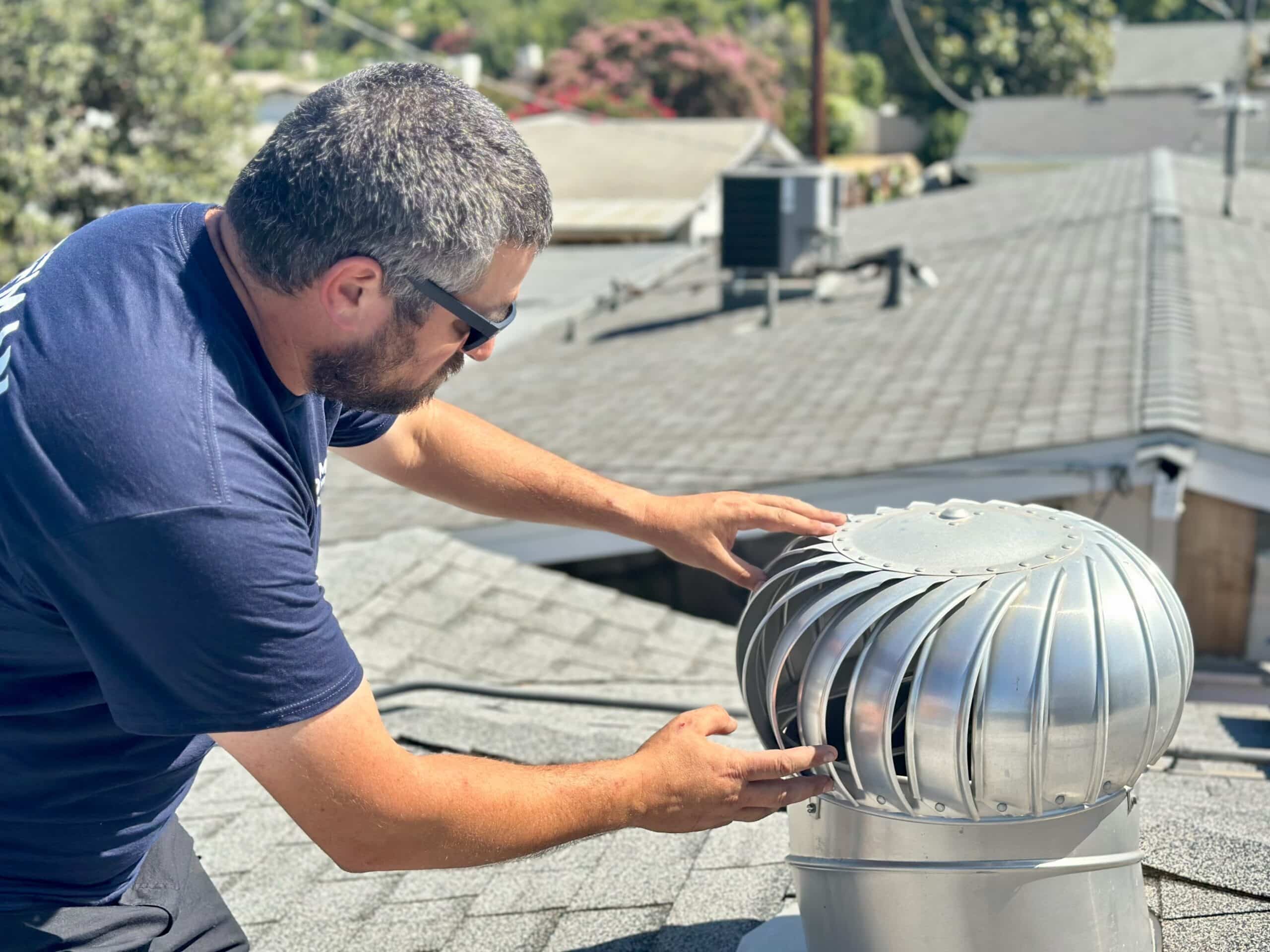
- WHEN HEAT HAS NOWHERE TO GO
Why Attic Ventilation Matters
When ventilation is working properly, attic temperatures stay closer to outside conditions instead of building heat all day long. When it’s not, heat builds up through the day and radiates down into the living space — and the AC runs longer and harder trying to compensate.
In the Valley, where summers are brutal and attics can hit over 140 degrees, poor attic ventilation may be one reason a system isn’t keeping up.
- INTAKE & EXHAUST
How Attic Ventilation Works
Attic ventilation works by moving hot air out through exhaust vents while fresh air comes in through intake vents. Exhaust only works if there’s enough intake to replace the air that’s leaving, and intake only works if the hot air has somewhere to escape.
01
Passive Ventilation Has Limits
Some homes rely on passive roof vents to let heat escape naturally as it rises. In hotter parts of Los Angeles, especially during long summer stretches, passive ventilation alone often isn’t enough.
02
INTAKE MAKES EXHAUST POSSIBLE
Think of it like a chimney: air needs somewhere to come in low before it can move up and out at the top. Without enough intake, the replacement air has to come from somewhere else.
03
Exhaust Fans Pull From Wherever They Can
When there isn’t enough intake, an exhaust fan pulls air from wherever it can find it — including gaps between the attic and the house below.
04
Adding Exhaust Doesn't Fix Blocked Intake
Many older homes have intake ventilation that’s blocked or was never adequate to begin with. Adding more exhaust without fixing intake usually doesn’t solve the problem.
- THE SOLUTION DEPENDS ON THE ATTIC
Powered Attic Fans — What to Know
The right attic ventilation solution depends on what’s actually happening up there, not just adding more equipment.
01
Pulling Heat Out Before It Builds Up
In the right attic, a powered attic fan can make a big difference. Done right, it pulls heat out before it has a chance to build up over the living space below, taking real load off the AC system during extreme summer heat.
02
Fans Need Intake to Work
A powered fan only works well when the attic is a good candidate for one — which means having enough intake ventilation to support it. In some homes, improving intake ventilation or attic insulation makes a bigger difference than adding a fan.
03
Sized and Placed Correctly
We install powered attic fans as standalone upgrades and when excessive attic heat is contributing to AC performance problems. Every fan is sized and placed to match the specific attic.
- LOOKING BEYOND THE EQUIPMENT
Attic Ventilation & Your HVAC System
That extra heat makes the AC run longer, increasing both energy use and wear on the equipment.
When we’re diagnosing a problem or replacing a system and the attic looks like it’s part of the problem, we’ll tell you. Fixing the equipment without addressing what it’s working against often just sets you up for the same problem again.
Why Homeowners Call Hoffman for Attic Ventilation
Every attic is different. Sometimes the answer is adding a powered attic fan. Sometimes it’s improving intake ventilation, opening blocked soffit vents, or correcting an existing ventilation setup that isn’t working properly.
We look at the attic as a system and recommend what actually makes sense for your home.
Attic Ventilation FAQ
Do attic fans help lower attic temperatures?
Yes. A properly sized and installed attic fan can help lower attic temperatures by actively pulling hot air out of the attic. A powered attic fan actively pulls heat out instead of waiting for it to escape on its own. But the attic also needs enough intake airflow for the fan to work properly. In some homes, fixing blocked or inadequate soffit vents makes a bigger difference than adding more exhaust.
Do I need both exhaust and intake vents?
Yes — ventilation only works when air can move through, not just out. Hot air needs a way to get out, but fresh air also needs a way to come in behind it. A common problem in older LA homes is blocked or insufficient soffit vents — the attic has exhaust but no intake, so airflow stalls. Fixing the intake often matters more than adding more exhaust.
Can attic ventilation damage my AC system?
Poor attic ventilation can damage HVAC systems over time — excessive heat degrades ductwork, shortens equipment life, and forces the system to operate in conditions it wasn’t designed for. Proper ventilation helps the system. Excessive attic heat is what causes the damage.
How hot does an attic get in the San Fernando Valley in summer?
On a 100-degree Valley day, an unventilated attic can reach 150 degrees. That heat radiates into the living space, which means the AC is fighting not just the outdoor temperature but a superheated attic directly above the rooms it’s trying to cool. It’s one reason homes — especially in the Valley — can be hard to keep comfortable during a heat wave, and why attic ventilation is worth looking at when a system isn’t keeping up.
Why does attic ventilation matter?
A poorly ventilated attic traps heat in summer and moisture in winter. In summer, that heat flows to the living space and forces the AC to work harder. Over time, it degrades roofing materials, shortens the life of ductwork running through the attic, and significantly increases cooling costs. Good ventilation — intake at the soffits, exhaust at the ridge — keeps the attic closer to outdoor temperature.
Does attic ventilation actually help with AC performance?
Yes. Proper attic ventilation can reduce heat buildup in the attic, which can reduce the heat load on the home and help the AC system work more efficiently. In Valley homes, proper ventilation can meaningfully reduce how hard the AC system has to work and extend equipment life. It’s not a substitute for a well-sized, maintained system, but it’s one of the most cost-effective ways to improve overall performance.
What are signs of bad attic ventilation?
Top-floor rooms that are significantly hotter than the rest of the house, an AC that runs constantly but can’t keep up, unusually high energy bills, and excessive heat buildup in the attic can all be signs of poor attic ventilation. In some cases you can feel the heat radiating through the ceiling. An attic inspection tells us what you’re working with.
Think Your Attic Might Be Part of the Problem?
If your AC is running hard and the house still isn’t keeping up, we’ll assess the attic ventilation and how it may be affecting the HVAC system. We’ll identify what’s contributing, explain your options, and recommend what makes the most sense for your home.