Services We Offer in the San Fernando Valley
Designed for Your Home. Built to Perform.
- BUILT FOR VALLEY HEAT
Valley Homes Need More From Their HVAC
The San Fernando Valley runs 10–15 degrees hotter than coastal Los Angeles on a typical summer day. In July and August, that gap widens. On a hot day, it’s not unusual to see 75 in Santa Monica while Woodland Hills is pushing 100. Or 85 in Brentwood while Tarzana sits at 105.
That’s not a weather footnote — it’s the whole job. A system designed for LA’s mild Westside climate is not the same system a Valley home needs. The load calculation changes. So do the cooling demands.
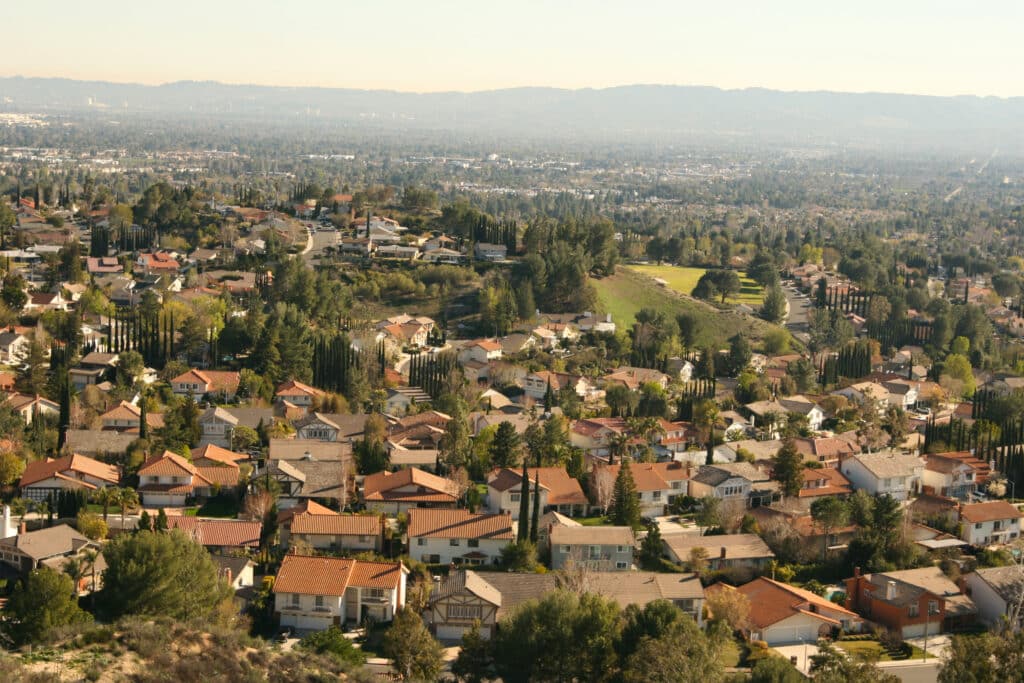
- SHORTCUTS DON'T SURVIVE THE VALLEY
Why HVAC Is Different in the Valley
The San Fernando Valley puts different demands on an HVAC system than the coast. Older homes, decades of retrofits, and hotter summers all affect what the system has to handle.
01
HOMES THAT WEREN'T BUILT FOR CENTRAL AIR
Many Valley homes were built in the ’50s and ’60s, before central air conditioning was standard. Systems were often added decades later, with ductwork worked into homes that weren’t designed for it.
02
OLDER RETROFITS CAN CREATE AIRFLOW PROBLEMS
Undersized return air, restrictive ductwork, and improperly sized equipment are common problems in older retrofits. When temperatures climb, those problems can make it harder for the system to move enough air and keep the house comfortable.
03
VALLEY HEAT LEAVES LESS ROOM FOR SHORTCUTS
When temperatures climb past 100 degrees, HVAC systems run harder and longer. Those longer run times can expose problems with airflow, ductwork, equipment sizing, or installation that might otherwise go unnoticed.
- WHAT WE HANDLE
HVAC Services Across the San Fernando Valley
We work on homes, apartment buildings, and commercial properties throughout the area.
- WHERE WE WORK
Valley Cities We Serve
Whether you’re in an older Tarzana ranch home, a hillside property in Sherman Oaks, or a newer development in Woodland Hills, we’ve been working across the Valley since 1981.
Service Areas
Why Valley Homeowners Call Hoffman
We’ve been doing HVAC in the Valley since 1981. We live here. We work here. We know what triple-digit summers do to equipment — and what it takes to keep systems running through them.
Every job gets a straight assessment and work that’s built to hold up to the Valley heat.
HVAC in the San Fernando Valley FAQ
Do Valley homes need bigger AC systems than Westside homes of the same size?
Not necessarily. Valley homes can have higher cooling loads than similarly sized homes on the Westside, but that doesn‘t automatically mean they need a bigger AC system. Proper sizing depends on the local climate, attic conditions, insulation, window exposure, and other characteristics of the home. Square footage alone doesn’t tell the whole story.
Why are some rooms in my Valley home hotter or colder than others?
Uneven temperatures are often an airflow problem. Aging ductwork, undersized returns, crushed or restricted duct runs, and poor duct layout can keep conditioned air from reaching every room evenly. Installing new equipment won’t necessarily correct those problems, which is why we look at the ductwork and airflow before deciding what needs to be addressed.
Why is it so much hotter in the Valley than on the Westside?
The Valley sits inland and gets less of the cool ocean air that reaches the Westside. The Santa Monica Mountains separate it from the coast, so temperatures climb higher and stay hot longer. On a summer day, Santa Monica can be in the 70s while Sherman Oaks or Woodland Hills is dealing with triple-digit heat. That’s why the Valley can feel like a different climate even though the coast is only a few miles away.
How does extreme Valley heat affect HVAC systems?
Extreme Valley heat makes HVAC systems run longer and puts more stress on the equipment. That extra runtime puts more wear on compressors, motors, capacitors, and other components. Attic equipment also has to operate in temperatures well above the outdoor temperature. Maintenance, attic ventilation, and properly installed ductwork all matter when a system works this hard.
Why do HVAC systems in the Valley fail during heat waves?
HVAC systems often fail during Valley heat waves because extreme temperatures and long run times push components harder. A weak capacitor, low refrigerant charge, dirty coil, or airflow restriction that didn’t cause a problem during milder weather can become enough to shut the system down. That’s why a system that seemed fine in June can fail in August. Pre-season maintenance can help catch those problems before the real heat arrives.