Commercial HVAC Maintenance & Repair in Los Angeles
Fix It Before It Fails
- PREVENTION COSTS LESS
Why Commercial HVAC Maintenance Matters
A commercial HVAC system that goes down during business hours isn’t just uncomfortable—it’s a disruption to operations, a potential code issue for food service and medical facilities, and often a preventable expense.
Most commercial HVAC problems develop over time and usually show signs before the system actually goes down. That’s why scheduled maintenance matters.
- HARDER USE. FASTER WEAR.
WHY COMMERCIAL SYSTEMS BREAK DOWN — AND HOW TO PREVENT IT
01
DEMANDING OPERATING CONDITIONS
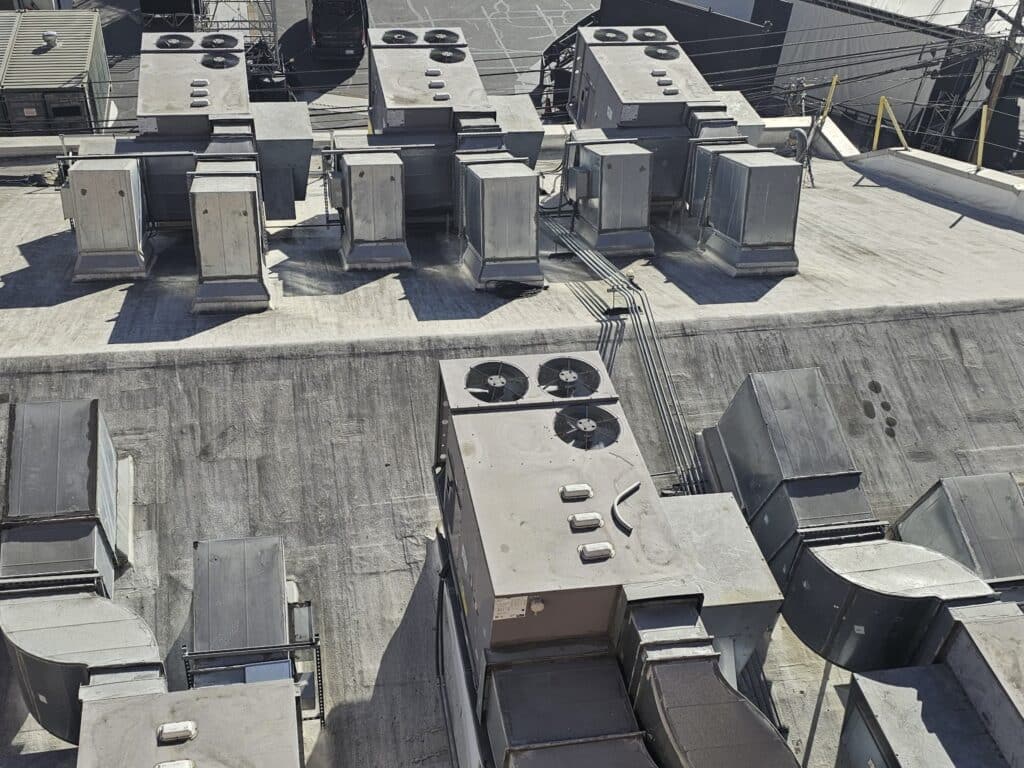
Rooftop units serving restaurants, retail spaces, offices, and mixed-use buildings can operate under demanding conditions. Heavy occupancy, kitchen heat loads, and long business hours can place sustained demand on the equipment, causing parts to wear and filters to clog faster.
02
SMALL PROBLEMS BECOME BIGGER PROBLEMS
Failures rarely happen at a convenient time, but many develop warning signs before the system actually goes down. Without scheduled maintenance, those signs can go unnoticed until the equipment fails.
03
MAINTENANCE CATCHES PROBLEMS EARLY
Scheduled maintenance gives us a chance to catch developing problems before they turn into breakdowns or emergency service calls. We offer maintenance programs built around the building, the equipment, and how the systems are actually used.
- A PLAN THAT FITS
Service Agreements Built Around Your Equipment
Service agreements are a good fit for commercial clients who want consistent maintenance without having to manage the schedule themselves.
We build maintenance agreements around the equipment and how it’s used, from service frequency to the scope of each visit. A restaurant with a rooftop package unit running through dinner service has different maintenance needs than a small office with a split system.
A typical agreement includes scheduled maintenance before the cooling and heating seasons, written documentation after every visit, and additional visits when the equipment or operating conditions call for them.
- WHAT WE INSPECT
What a Maintenance Visit Covers
Most commercial HVAC problems don’t happen without warning. A system usually shows signs of trouble well before it goes down — if someone’s looking for them.
01
ROUTINE MAINTENANCE & INSPECTION
We check filters, coils, belts, motors, drains, airflow, and rooftop equipment, handling routine maintenance and looking for visible wear or anything that needs attention.
02
TESTING & EARLY PROBLEM DETECTION
We test system operation and critical components to catch problems that aren’t always obvious during a visual inspection. A system can still be running while a problem is developing, and catching it early can help prevent downtime or an emergency service call.
03
WRITTEN SUMMARY AFTER EVERY VISIT
After every visit, we provide a written summary of what we found, what was addressed, and anything that needs attention, so facility managers and business owners know where the equipment stands.
- WHEN SOMETHING GOES DOWN
Rooftop & Split System Repair
Rooftop package units and split systems are the most common commercial HVAC systems we work on in Los Angeles. We handle one-time service calls when something goes down, as well as repairs for buildings we maintain on an ongoing basis.
ROOFTOP PACKAGE UNITS
- Rooftop package units combine heating and cooling equipment in one unit. They’re among the most common HVAC systems in Los Angeles commercial buildings. Because they sit outside, they’re exposed to weather and debris, and long operating hours can accelerate wear on coils, belts, motors, and electrical components.
SPLIT SYSTEMS
- Split systems have separate indoor and outdoor equipment. A problem with one part of the system can affect how the other performs. We look at how the indoor and outdoor equipment are working together before determining what needs to be repaired.
MINIMIZING DOWNTIME
- When commercial equipment goes down, getting the problem diagnosed correctly and repaired quickly matters. The goal is to get the equipment running reliably again while minimizing disruption to the business.
Why Business Owners & Facility Managers Call Hoffman
We work with commercial clients across Los Angeles — from restaurants and offices to retail, medical, and mixed-use properties. We perform scheduled maintenance and keep you informed so you’re never left guessing about the condition of your equipment. When something needs attention, we tell you before it becomes an emergency. When a repair comes up between visits, we already know the system — which means less time diagnosing and more time fixing.
Commercial HVAC Maintenance FAQ
How does a commercial HVAC service agreement help prevent emergency repairs?
Scheduled maintenance catches developing problems before they become failures, so fewer emergencies happen in the first place. If a repair is needed between visits, we’re already familiar with the equipment and its service history, so we’re not starting the diagnostic process from scratch.
Do you service rooftop package units and split systems?
Yes. Both are standard commercial equipment and part of our regular work. We service equipment from all major manufacturers and don’t require that we installed the system to take it on for maintenance.
Can you take over maintenance on a system you didn't install?
Yes. We start with a baseline inspection to assess condition and document what we find. That gives us a clear starting point and a baseline to measure against going forward.
Can maintenance help prevent expensive breakdowns?
Yes. It’s the main reason commercial clients put service agreements in place. Most equipment failures don’t happen without warning — there are signs a trained technician catches during a routine visit that go unnoticed otherwise. Finding a failing capacitor or a developing refrigerant issue during a scheduled visit is usually far less expensive than dealing with the same problem after it becomes an emergency call in the middle of summer.
What's included in a commercial HVAC service agreement?
Scheduled maintenance visits — typically before the cooling and heating seasons — cover the full system, including mechanical components, electrical systems, airflow, and rooftop equipment. We document our findings, flag anything that needs attention, and provide a clear record of the equipment’s condition after every visit.
How often should commercial HVAC equipment be serviced?
Twice a year is a good baseline — once before cooling season, once before heating season. High-use equipment or systems in demanding environments may warrant additional visits. The right frequency depends on the equipment and how hard it’s running.
Need Commercial HVAC Service or Maintenance?
Whether it’s a one-time service call or ongoing maintenance, we’ll take a look at the system, explain what we’re seeing, and recommend what makes sense for the equipment, the building, and the business.