Indoor Air Quality in Los Angeles
What’s Moving Through Your Home Matters
- IT’S ABOUT MORE THAN TEMPERATURE
What Affects Indoor Air Quality in Los Angeles Homes
Your HVAC system doesn’t just heat and cool — it moves air through your home all day long. What’s in that air matters. Dust, allergens, mold spores, wildfire smoke, construction dust — if the system isn’t set up to handle them, it just recirculates them through the home.
In Los Angeles, air quality is part of how your home actually feels. The Santa Anas, wildfire seasons, marine layer conditions, and older homes with decades of buildup in the ductwork all play a role.
Those conditions affect different homes differently. There isn’t one solution for every indoor air quality problem — what makes sense depends on what’s affecting the air and how it’s moving through the home.
- FILTRATION & VENTILATION
Indoor Air Quality Solutions
01
Air Filtration & Purification
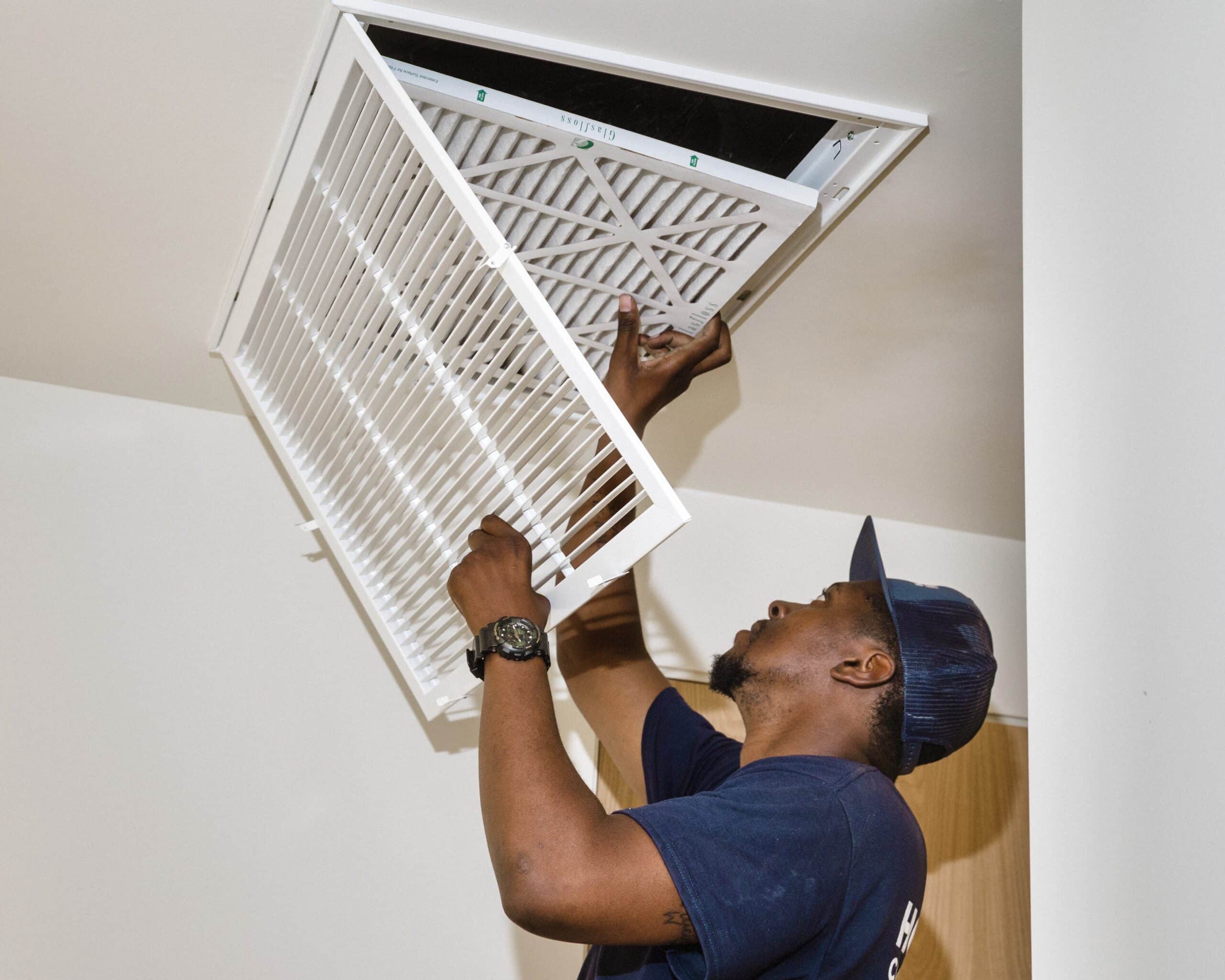
Whole-home filtration systems, UV purification, air scrubbers, and media air cleaners that work through your existing HVAC system. Designed to address problems like allergies, wildfire smoke, mold, bacteria, and post-construction dust.
02
Attic Ventilation
Exhaust vents, powered attic fans, and intake venting that keep attic temperatures from building up and radiating heat into the living space. In the Valley, where attics exceed 140 degrees in the summer, this directly affects how hard your AC works and how long it lasts.
- LOS ANGELES IS DIFFERENT
WHY INDOOR AIR QUALITY MATTERS IN LOS ANGELES
Most parts of the country deal with one or two seasonal air quality issues. Los Angeles deals with several at once — and some of them year-round.
01
Wildfire Smoke
The particles wildfire smoke carries are small enough to pass through standard filters and persistent enough to linger long after the smoke clears. For families with asthma, allergies, or respiratory sensitivities, a smoke event with inadequate filtration is a real concern.
02
SANTA ANA WINDS
The Santa Anas carry dust and fine particulates from the desert into Los Angeles — particles that can make their way indoors and be difficult for basic filtration to capture.
03
MARINE LAYER & INVERSIONS
The marine layer brings cool, moist air in from the coast — and when warmer air sits above it, pollutants can get trapped closer to the ground instead of dispersing. When that happens, those pollutants can also make their way indoors.
04
CONSTRUCTION DUST
Construction and remodeling can affect the air well beyond the jobsite. Demolition, concrete work, and drywall sanding can generate fine particles that travel through the surrounding area and make their way into nearby homes. With rebuilding underway in Pacific Palisades, construction dust has become part of the indoor air quality conversation.
05
INDOOR DUST
Older homes can have years of dust built up in and around the HVAC system. Dust can also enter the home from attics, gaps, and other unconditioned spaces, adding to what the HVAC system has to filter and circulate.
- HOW IT ALL CONNECTS
How Your HVAC System Affects Indoor Air Quality
Your HVAC system moves the air through your home. Every time it runs, that air passes through the filter, travels through the ductwork, and circulates back into your living space.
WHAT RESTRICTS FILTRATION
- Undersized return air reduces how much air reaches the filter
- Restrictive ductwork limits airflow through the system
- Leaky return ductwork can pull unfiltered attic air into the system
- A clean filter can only capture particles from the air that actually passes through it
HOW ATTIC VENTILATION PLAYS A ROLE
- An under-ventilated attic adds heat load, which can mean longer AC run times during hot weather
- Better attic ventilation can reduce that load and help the system run more efficiently
WE KNOW WHERE TO LOOK
- Indoor air quality isn't determined by the filter alone. Airflow, ductwork, filtration, and attic ventilation can all affect how the HVAC system performs and how air moves through the home. We know when to look beyond the filter, and where else to look when the filter isn’t the problem.
Why Homeowners Call Hoffman for Indoor Air Quality Work
Indoor air quality problems rarely have a one-size-fits-all solution.
Whether you’re dealing with a specific concern or looking for ways to improve your home’s indoor air quality, we’ll help you figure out what makes sense.
Not Sure What’s Affecting the Air in Your Home?
Indoor air quality problems can come from more than one place. We look at how air is moving through the home, what the HVAC system is doing, and whether filtration, ductwork, or ventilation may be part of the problem. We’ll tell you what we find and how it can be addressed.