AC Repair in Los Angeles
Find the Problem. Fix It Right.
- WHAT WE LOOK FOR
Finding the Cause Before Recommending the Fix
Sometimes an AC repair is as simple as replacing a failed capacitor, contactor, or motor. Other times, the problem goes beyond the part that failed — a refrigerant leak, restricted airflow, or an installation issue may have been putting stress on the system over time.
The job is knowing which situation you’re dealing with and not missing the larger problem behind it.
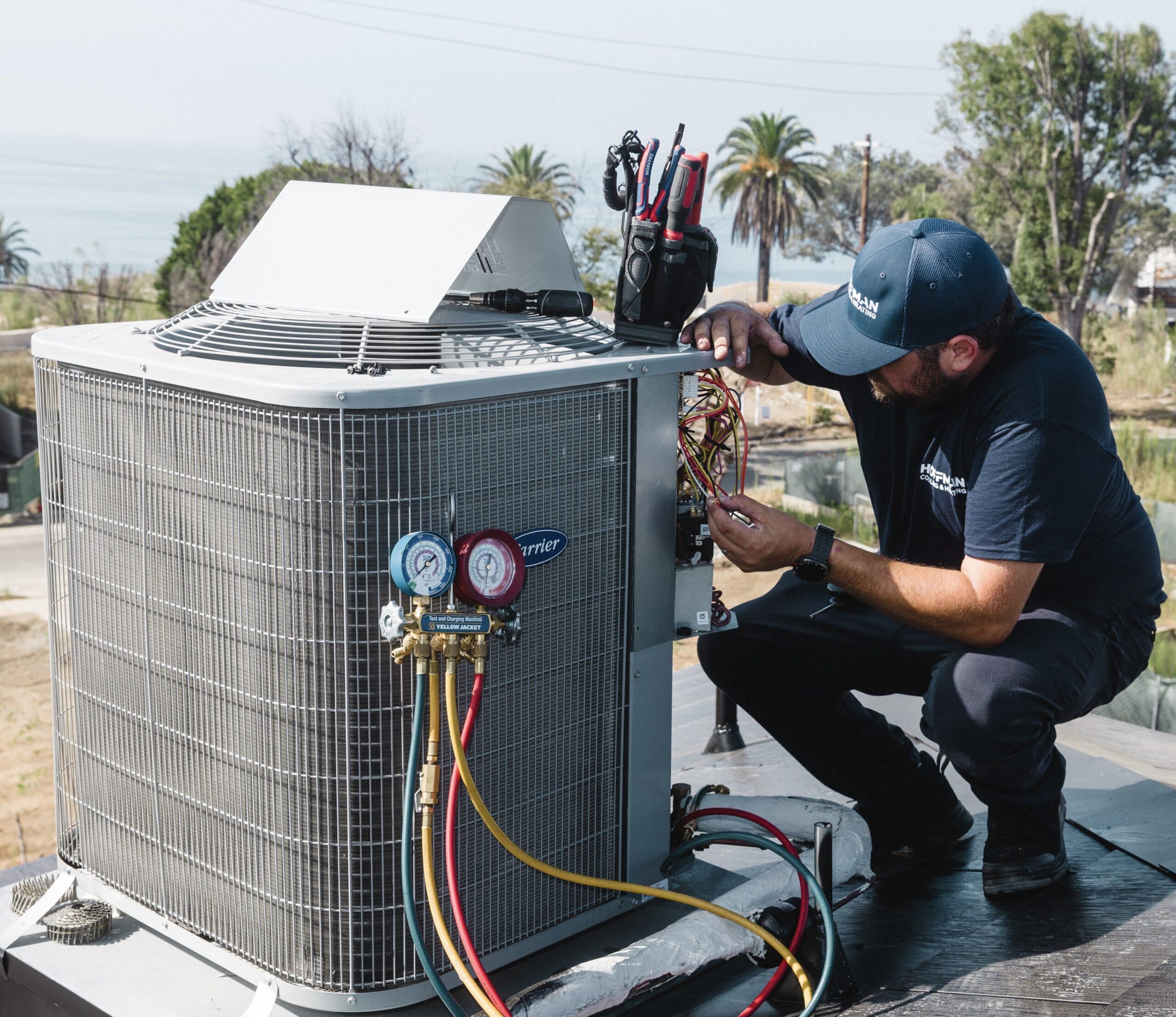
- THE DIAGNOSTIC PROCESS
What We Do When We Show Up
01
We Ask Questions First
Homeowners can usually tell you a lot. Maybe the problem only happens in the afternoon. Maybe the system shuts off after twenty minutes. Maybe one room never cools the same as the rest of the house. Those details matter.
02
We Follow the Symptoms
Depending on what the system is doing, that may mean testing electrical components, checking temperatures and airflow, inspecting the refrigerant side, or watching the equipment operate through a full cooling cycle.
03
WE FIND WHAT’S REALLY GOING ON
Sometimes we find one failed part and nothing more. Other times, the failed part is only where a larger problem finally showed up. Either way, we diagnose before we recommend the fix.
- COMMON PROBLEMS WE FIND
WHAT WE SEE MOST IN LA HOMES
Some AC repair calls come down to one failed component. Others reveal problems that have been affecting the system for years.
The point isn’t to assume every repair is complicated. It’s to recognize when a straightforward repair will solve the problem — and when it won’t.
01
ELECTRICAL & REFRIGERANT
Failed capacitors, contactors, motors, wiring, and other electrical components. Refrigerant leaks or incorrect refrigerant charge. These are common AC problems, and sometimes the repair is straightforward.
02
Airflow & Ductwork
Dirty coils, undersized returns, and damaged ductwork can restrict airflow and affect how the system performs. When airflow is part of the problem, fixing the failed component alone may not solve it.
03
Controls & Installation Problems
Thermostat and control issues can keep otherwise good equipment from operating correctly. We also find systems that were oversized or installed around ductwork that couldn’t handle the airflow, leading to short cycling, frozen coils, uneven temperatures, or premature wear.
- IF IT CAN BE FIXED, WE'LL FIX IT
Repair or Replace — We'll Give You a Straight Answer
The decision between repairing and replacing an air conditioner usually comes down to more than its age. We look at the overall condition of the equipment, how the system has been running, whether problems are becoming recurring, whether airflow or ductwork issues are putting additional stress on it, and whether the repair still makes financial sense.
A well-maintained 12-year-old system with a failed capacitor may still have years left. An older system with a leaking coil, compressor trouble, poor airflow, and a history of repairs is a different conversation.
Before recommending a direction, we look at the full cooling system — not just the part that failed. If it’s fixable, we’ll fix it. If you’re putting money into a system that’s on its way out, we’ll tell you before you spend it.
- BUILT FOR A DIFFERENT ERA
Older LA Homes Have Their Own Challenges
WHAT OLDER HOMES TYPICALLY DEAL WITH
- Built before central air conditioning was standard
- Undersized return air and tight attic configurations
- Aging ductwork that was never updated as the home changed
- Rooms added and layouts changed over the years without updating the system around them
- Electrical work added in layers over decades
A FAILED PART ISN'T ALWAYS THE WHOLE STORY
- Uneven cooling, poor airflow, long run times, and repeat equipment failures often trace back to how the system has evolved over time. When we're working in an older home, we want to understand what the rest of the system has been asking that component to do — not just replace what broke.
Why Homeowners Call Hoffman for AC Repair
After more than four decades repairing AC systems in Los Angeles, we know where cooling problems start, what causes repeat failures, and how to tell when a failed part is pointing to a larger problem. We fix what can be fixed and explain what we find.
AC Repair FAQ
Why is my AC freezing up?
An AC usually freezes because there isn’t enough airflow across the evaporator coil or because the system is low on refrigerant. Check the filter first and replace it if it’s dirty. Then turn the cooling off and set the thermostat fan to On instead of Auto. The moving air will help the coil thaw. Don’t restart the cooling until the system has thawed completely. Continuing to run a frozen AC can damage the compressor.
Should I repair or replace my air conditioner?
If the repair makes financial sense and the rest of the system is in good condition, fixing it is usually the right move.
Replacement may make more sense when the equipment is older, struggling to keep up, repairs are becoming more frequent, a major component has failed, or other problems will remain after the repair. The decision depends on the overall condition of the system, the airflow through the home, how the equipment has been maintained, and the repair cost.
Is it worth repairing an older R-22 air-conditioning system?
An older R-22 air-conditioning system can be worth repairing if the problem is minor and the rest of the system is in good condition. A refrigerant leak, failed compressor, or other major repair is harder to justify because new R-22 is no longer produced or imported into the United States, and servicing an older system can become expensive.
We compare the cost of the repair with the condition of the equipment before recommending whether to fix it or put that money toward replacement.
How much does AC repair cost in Los Angeles?
The cost of AC repair depends on what failed, the parts required, how accessible the equipment is, and how long the repair takes. A failed capacitor or contactor may be a straightforward repair. Refrigerant leaks and major component failures are more involved. A diagnosis is needed before we can give an accurate estimate.
Why is my AC running but not cooling the house?
If your AC is running but not cooling the house or is blowing warm air, common causes are a failed capacitor, a failed condenser fan motor, low refrigerant, a dirty condenser coil, or a failing compressor. Some problems are straightforward repairs. Others may be signs that the system is starting to age out. Either way, it’s worth getting looked at before the problem gets worse.
Why won’t my air conditioner turn on?
Common reasons an air conditioner won’t turn on include an incorrect thermostat setting, a tripped circuit breaker, a failed capacitor or contactor, or another electrical or control problem. On systems with a condensate safety switch, a clogged drain can also shut the AC down. Check the thermostat and breaker first. If the breaker trips again or the AC still won’t start, leave it off and have the problem diagnosed.
Why does my AC keep turning on and off?
An AC that repeatedly turns on and off may have low refrigerant, a thermostat or control problem, or equipment that was oversized from the start. This is called short cycling, and the repeated startups put additional wear on the system.
Get Your AC Fixed Right
If your system isn’t keeping up, has broken down, or needs a repair you’ve been putting off — give us a call or text. We’ll find what’s wrong and tell you straight what it means.